Author: bmgindia

  • High Warranty Claims Signal Weak Design, BMGI India Uses Design for Six Sigma to Build Reliability in Before Launch

    High Warranty Claims Signal Weak Design, BMGI India Uses Design for Six Sigma to Build Reliability in Before Launch

    When warranty claims start rising, it usually means the real problem began much earlier in the design phase. Fixing those issues after launch drains budgets, frustrates customers, and puts pressure on engineering teams. The better option is to prevent failures before they ever reach the market. Design for Six Sigma, often called DFSS, helps teams do exactly that by building reliability into products from the start.

    BMGI India works closely with organizations to apply DFSS in a practical way that ties engineering decisions to customer expectations.

    Reliability begins long before production

    Many companies still evaluate quality at the end of development. By the time a defect appears in testing or early production, it is already costly to correct. This gap often shows up later as customer complaints and high warranty costs.

    DFSS brings quality thinking into the earliest stages. Teams begin by defining customer needs clearly, translating them into measurable requirements, and designing products that remain stable under real-life conditions. The goal is simple. Instead of asking why defects occur after launch, prevent them before the product enters production.

    A commonly used benchmark within Six Sigma is 3.4 defects per million opportunities. That is the level of reliability companies aim for when DFSS is applied well. It sets a clear target that helps design teams understand what true robustness looks like.

    How DFSS changes product development

    DFSS gives structure to design work without slowing it down. Teams define the problem, study how variation affects performance, and design solutions that work across a range of operating conditions.

    Tools such as predictive modeling, tolerance analysis, and structured experiments help teams understand how different factors influence product behavior. This approach reduces redesign loops and minimizes late-stage surprises.

    The result is a design that produces fewer failures, needs fewer engineering change orders, and launches more smoothly.

    A practical example

    A consumer products manufacturer struggled with recurring failures in a motor-driven assembly. Instead of treating it as a production issue, BMGI India guided the team through a DFSS project. They studied how torque shifted with temperature, material flexibility, and housing tolerances. Through a structured experiment, the team identified combinations that caused performance drops.

    The final design stayed stable across wider conditions and reduced warranty claims by more than one third within the next year. The team also gained a method they could apply to new designs instead of relying on guesswork.

    How BMGI India supports DFSS

    DFSS works best when teams understand not just the tools but when to use them. BMGI India coaches engineering and R&D teams in methods that fit their environment. Consultants guide teams as they define critical requirements, run experiments, interpret data, and validate design robustness before scaling up.

    The goal is lasting capability. Once trained, internal teams can apply DFSS techniques to future projects without depending heavily on outside support.

    A system that protects reliability

    Strong design alone is not enough. Manufacturing and quality teams also need to follow consistent review processes and handover practices. BMGI India helps organizations set up systems that keep reliability intact from concept to full-scale production.

    This approach reduces firefighting and helps companies build reputations for dependable products.

    Conclusion

    High warranty claims are rarely accidents. They usually point to reliability gaps in the design phase. Design for Six Sigma gives companies a structured way to prevent early failures, reduce rework, and deliver products that perform well from the first day.

    BMGI India brings deep DFSS experience across industries. By focusing on prevention rather than correction, BMGI India helps organizations design products with stronger reliability, lower defect rates, and fewer post-launch surprises.

    If reliability starts at the beginning, the gains last for years.

    Source: https://sixsigmaexpert.wordpress.com/2025/12/08/high-warranty-claims-signal-weak-design-bmgi-india-uses-design-for-six-sigma-to-build-reliability-in-before-launch/

  • Understanding Mega Process Redesign: When and Why Organizations Need Large-Scale Process Changes

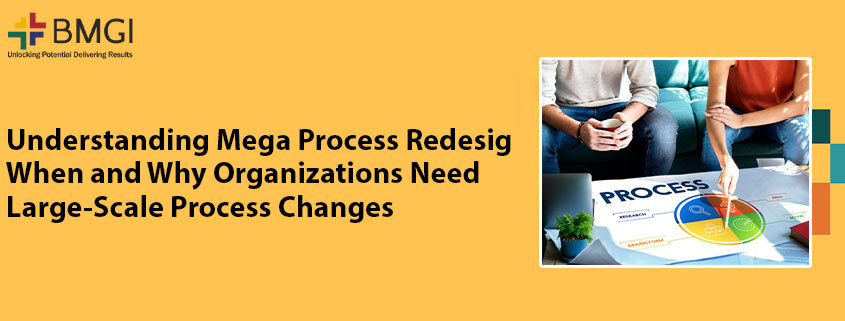
    Understanding Mega Process Redesign: When and Why Organizations Need Large-Scale Process Changes

    Most companies improve processes through incremental fixes. These small adjustments help for a while, but eventually the organisation reaches a point where minor changes no longer address deeper structural issues. This is when mega process redesign becomes necessary. It is a disciplined effort to rethink how work flows end to end, often across functions, systems, and decision layers.

    Mega process redesign is used by organisations working with management consultants, operational teams, and specialists in business consulting India who focus on solving chronic performance constraints.

    What makes a process problem large scale

    A process moves into large scale territory when:

    • Multiple functions touch the work
    • Existing workflows create recurring delays or rework
    • Technology, data, and roles do not align
    • Teams struggle to meet cost, quality, or delivery expectations
    • Fixes treat symptoms without addressing the root structure

    Such problems require end to end process redesign, not isolated improvements.

    When organisations choose mega process redesign

    Mega process redesign is considered when:

    1. Performance gaps persist despite repeated fixesIf recurring issues keep resurfacing, the underlying design, not execution, is the barrier.
    2. Workflows depend heavily on manual checksManual approvals, repeated handovers, and unclear roles create inefficiency and variation.
    3. Customers experience long wait times or inconsistent qualityEnd to end flow must be re-evaluated when service levels consistently fall short.
    4. Technology upgrades no longer fit the current processWhen systems and processes grow misaligned, improvements stall until both are redesigned together.
    5. Strategic goals shiftNew markets, cost targets, or regulatory conditions often require redesigned workflows to reach future goals.

    These signals are common triggers flagged in process transformation consulting and large scale process change programs.

    How mega process redesign works in practice

    A structured redesign effort typically includes:

    1. Diagnostic assessmentTeams map current processes, collect cycle time and variation data, and identify constraints. This step relies on business process improvementand process excellence methods.
    2. Define the target stateThe organisation sets measurable expectations for quality, speed, cost, and accountability. A clear target gives direction to all redesign decisions.
    3. Redesign the end to end workflowTeams eliminate unnecessary steps, simplify decision flows, clarify ownership, and align digital tools with the new design. This blends process optimizationwith cross-functional design sessions.
    4. Test in controlled cyclesPilot runs validate the new workflow under real conditions. Data confirms which design choices hold and which require refinement.
    5. Scale with standards and capability buildingClear roles, training, metrics, and governance ensure the redesigned process delivers consistent performance over time.

    What organisations gain from large scale process change

    Mega process redesign delivers benefits that smaller fixes cannot achieve:

    • Shorter cycle times and fewer handovers
    • Reduced rework and improved consistency
    • Clearer accountability and stronger decision flow
    • Digital systems aligned to actual work, not outdated processes
    • Lower operating cost with more predictable output
    • Better connection between strategy and daily execution

    These outcomes are often sought by organisations working with management consultants or teams specialising in process transformation consulting.

    Turning structural complexity into manageable flow

    Mega process redesign is not about making processes complicated. It is about removing clutter, clarifying work, and building a flow that supports the performance the organisation needs. By understanding when structural redesign is necessary and applying a disciplined approach, companies can overcome long-standing bottlenecks and create processes that are faster, more stable, and easier to run.

    Source: https://sixsigmaexpert.wordpress.com/2025/12/08/understanding-mega-process-redesign-when-and-why-organizations-need-large-scale-process-changes/

  • A Practical Look at Business Transformation and Why Companies Struggle to Execute It

    A Practical Look at Business Transformation and Why Companies Struggle to Execute It

    Business transformation often sounds straightforward: redefine priorities, redesign processes, and strengthen performance. Yet most organisations find that progress slows once the real work begins. Even with strong intent, many transformations stall because execution habits, decision routines, and capability gaps hold teams back. Insights shared below reflect challenges commonly addressed through business consulting services and the experience of seasoned management consultants.

    What transformation actually requires

    True transformation is more than a collection of improvement projects. It is a coordinated shift in how a company sets objectives, assigns ownership, and solves problems. Organisations that make steady progress usually establish:

    • A clear definition of the issues that need to be resolved
    • Value streams that show how work flows across departments
    • Strategic priorities translated into specific actions
    • Governance that promotes timely, fact-based decisions
    • Teams equipped with structured problem-solving tools

    These elements form the foundation used by experienced management consultants in India when guiding large-scale change programs.

    Why companies struggle to execute transformation

    1. Too many initiatives running at onceOrganisations often launch multiple programs without matching them to available capacity. This creates scattered effort and unclear focus.
    2. Strategy that stops at the conceptual levelIf teams cannot see how the strategy changes their daily work, transformation becomes an abstract document instead of a practical guide.
    3. Work trapped in functional silosFunctions optimise for their own metrics instead of enterprise goals. Business consulting Indiaexperts commonly identify this as a core barrier to value delivery.
    4. Weak performance routinesWithout regular reviews, deviations grow unnoticed. Effective transformation requires short, predictable routines where issues are surfaced early.
    5. Limited problem-solving capabilityTeams may not have the methods or confidence to address recurring issues at their level. This slows momentum and increases dependency on senior leaders.

    What a practical transformation approach looks like

    A more reliable path to transformation usually includes:

    • Aligned priorities. Fewer initiatives, each tied to measurable outcomes.
    • End-to-end value streams. Improvements targeted at the entire flow, not isolated steps.
    • A transformation office. A small central team to track progress, highlight risks, and maintain discipline.
    • Structured performance routines. Daily, weekly, and monthly reviews used consistently across functions.
    • Stronger problem-solving capability. Methods such as Lean, Six Sigma, or root cause analysis to address issues quickly.
    • Clear ownership. Defined roles so responsibility does not diffuse across teams.

    These practices reflect the approach often used by the best strategy and management consulting firm teams when building long-term internal capability.

    How transformation creates sustainable gains

    When executed well, transformation improves operational stability, strengthens accountability, aligns decisions with enterprise goals, and directs resources to high-impact work. It builds a disciplined environment where priorities are clear, measures are transparent, and progress is easier to sustain.

    For organisations looking to improve resilience and sharpen execution, a structured transformation method combined with consistent routines provides a practical and repeatable path forward. Insights from experienced management consultants and leading business consulting services demonstrate that sustainable change is less about ambition and more about disciplined follow-through.

    Source: https://medium.com/@bmgindia/a-practical-look-at-business-transformation-and-why-companies-struggle-to-execute-it-b4bdbae34966

  • Why so many ideas stall before they reach the market and how a structured innovation method can move them forward

    Why so many ideas stall before they reach the market and how a structured innovation method can move them forward

    Great ideas rarely fail on imagination. They fail in handoffs, vague problem statements, slow decisions, and experiments that are too big to learn fast. This article explains common stall points and outlines a practical, stepwise method inspired by the D4 approach to move ideas from concept to market with clarity and speed.

    Why ideas stall

    • Unclear problem framing. Teams start with solutions rather than a validated customer or operator need. The target outcome is fuzzy and success criteria shift midstream.
    • No single owner. Governance is split. Sponsorship is broad but accountability is thin.
    • Oversized bets. Pilots try to prove everything at once. Learning cycles are long and costly.
    • Weak evidence. Decisions rely on opinions or small anecdotes instead of structured data and tests.
    • Crowded portfolios. Too many projects run in parallel. Nothing gets the attention needed to cross the finish line.

    A structured D4 method that keeps ideas moving

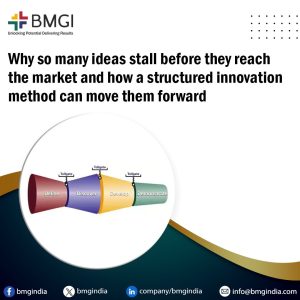
    A simple four stage flow creates speed without chaos. Use clear gates, small experiments, and tight feedback.

    1) Define

    • Articulate the problem, users, and jobs to be done. Separate symptoms from root causes.
    • Set measurable outcomes. Example metrics: time to task, defect rate, adoption target, unit cost.
    • Map constraints. Technical, regulatory, safety, capacity, and data availability.

    2) Discover

    • Collect field evidence. Shadow users, sample logs, and review failure modes.
    • Explore solution patterns. Use TRIZ, design heuristics, and benchmarks from adjacent domains.
    • Generate options, then screen quickly with a scorecard that balances impact, feasibility, and risk.

    3) Develop

    • Design the smallest test that can disprove a risky assumption. Keep scope tight and run multiple quick cycles.
    • Build a proof of concept or minimum viable workflow. Instrument it for data from day one.
    • Define the operating envelope. What settings hold performance stable and what breaks it.

    4) Deliver

    • Prepare the scale plan. Standard work, training, support model, and change impacts.
    • Run a controlled pilot in a real environment. Compare targets vs actuals. Record gaps and fixes.
    • Decide at the gate. Scale, iterate, or stop. Retire lower value items to protect capacity.

    Metrics that matter

    Track a short list end to end:

    • Time from Define to first in field test
    • Cost per learning cycle and number of cycles per quarter
    • Evidence quality score at each gate
    • Adoption and performance in pilot vs target
    • Time from pilot exit to scale deployment

    Practical tips to avoid common traps

    • Start with the riskiest assumption and test that first.
    • Keep experiments small enough to run in days or weeks, not months.
    • Limit the active portfolio. Finish more by starting less.
    • Separate idea status from problem solving. Use root cause tools when targets slip.
    • Write down what you will stop if a new idea is funded.

    What changes when D4 is in place

    Work moves with purpose. Ideas flow through clear stages with evidence at each gate. Teams make smaller, faster decisions, and only the most promising concepts scale. The result is a pipeline that delivers outcomes, not just concepts, and a repeatable way to turn ideas into products and processes that customers and operators actually use.

    Source: https://bmgindia.business.blog/2025/11/14/why-so-many-ideas-stall-before-they-reach-the-market-and-how-a-structured-innovation-method-can-move-them-forward/

  • Too Many Redesigns, Too Little Time? How BMGI India Uses Design for Six Sigma to Build Quality Into Every Product

    Too Many Redesigns, Too Little Time? How BMGI India Uses Design for Six Sigma to Build Quality Into Every Product

    You know that sinking feeling when a launch goes sideways. Complaints rise, warranty costs spike, and the team scrambles to fix issues that should have been caught earlier. Most companies treat quality like a fire drill. They wait for smoke, then react. Design for Six Sigma (DFSS) flips that script and builds quality into the design from day one.

    What makes Design for Six Sigma different

    Traditional Six Sigma improves existing processes after problems appear. DFSS methodology prevents those problems from appearing at all. Instead of asking why defects happened, you design the product and process so the defect modes have nowhere to hide.

    The difference shows up in the numbers. DFSS teams work toward defect rates near 3.4 DPMO, which means fewer failures in the field, lower support costs, and less stress for customers and engineers alike. BMGI India applies DFSS in real settings, not just in slide decks, so product choices and manufacturing limits line up before release.

    A clear DFSS path that keeps work moving

    DFSS often follows the DMADV process. It keeps teams focused and avoids churn.

    • Define: Capture what customers value in measurable terms. Translate complaints and preferences into clear outcomes such as life, strength, fit, noise, or ease of use.
    • Measure: Turn those outcomes into CTQs with target ranges and test methods. Confirm the measurement system works before you rely on it.
    • Analyze: Model risks and sensitivities early. Use simple transfer functions, FMEA, and short screening studies to see what actually drives performance.
    • Design: Compare multiple concepts against the CTQs and real process capability. Pick the option with the widest process window, not just the best lab result.
    • Verify: Prove the design with pilots and reliability tests that mirror actual use. If targets are not met, adjust here, not after tooling is frozen.

    Each step has evidence you can check. Teams know when to move forward because the data says so.

    Why this approach speeds you up

    DFSS adds thinking time upfront, then removes months of rework later. One program that avoids a tooling change or a late design rewrite often pays for the entire effort. Shorter cycles mean faster launches, fewer customer issues, and more engineering time spent on the next idea instead of yesterday’s fix.

    DFSS methodology prevents those problems from appearing at all.

dfss design for six sigma

    Using data without the headache

    You do not need heavy math to use DFSS well. Focus on a few tools that give clear decisions.

    • Transfer functions: Link inputs to outputs so design choices are explicit. If a valve must meet a flow target across temperature and pressure, model it before you cut metal.
    • Monte Carlo simulations: Stress the design in software to see how normal manufacturing variation affects quality. Fix weak points before they reach production.
    • Response surface methods: Tune two or three variables together to find robust settings quickly.
    • Tolerance analysis with real capability: Use Cp and Cpk from similar processes rather than perfect assumptions.

    The aim is better choices with the data you already have.

    When DFSS is the right fit

    Use DFSS when the stakes and uncertainty are high.

    • New products or major redesigns
    • Safety or reliability is critical
    • Requirements are complex or not fully understood
    • Normal variation in manufacturing could sink performance

    For incremental improvements to stable designs, DMAIC is usually enough. DFSS shines when getting it right the first time matters.

    How teams build capability that lasts

    Changing documents is easy. Changing habits takes practice. BMGI India’s DFSS consulting structures training around live projects so people learn by doing. Teams often start with QFD and CTQ flowdown, then add DOE, tolerance analysis, and basic simulation when the project needs it. Certification helps, but the real test is whether DPMO drops on actual programs and whether launches run with fewer surprises.

    Over time, internal coaches emerge. They review CTQs, check measurement plans, and keep pilots honest. Knowledge shifts from the consulting room to your conference room, which is the point.

    Metrics that tell you DFSS is working

    Look for movement in the measures you already track.

    • Time from concept to production
    • Defects during pilots and initial runs
    • Customer returns and warranty costs in the first year
    • Engineering change orders after design freeze
    • Cost of poor quality as a share of revenue

    If these improve across projects, your DFSS system is healthy. If they stall, inspect the flow. Teams may be skipping measurement checks or verifying too late.

    Common traps and simple ways around them

    • Analysis paralysis: Set time boxes for each DFSS step. Make the best call with the data on hand and move.
    • Skipping verification: If pilots are thin, problems simply shift to launch. Keep the tests.
    • Applying DFSS everywhere: Focus on programs where design choices drive business results.
    • Ignoring manufacturability: Bring production engineers in early so specs match real capability.

    What this means for your next launch

    Design for Six Sigma training will not fix every challenge, and it requires commitment. Yet if you are tired of redesign loops, late fixes, and rising warranty costs, it offers a practical alternative. Start with one or two pilot projects. Prove the value. Scale the routines that work.

    BMGI India’s Design for Six Sigma consulting helps organizations embed DFSS so quality is designed in and stays in. The outcome is simple. Fewer redesigns. Fewer escapes. Faster, cleaner launches that customers trust.

    Source: https://sixsigmaexpert.wordpress.com/2025/11/14/too-many-redesigns-too-little-time-how-bmgi-india-uses-design-for-six-sigma-to-build-quality-into-every-product/


  • Are Demand Swings and Stockouts Eroding Loyalty, and How Can Process Optimization Lift OTIF, Reduce Returns, and Grow Repeat Purchase?

    Are Demand Swings and Stockouts Eroding Loyalty, and How Can Process Optimization Lift OTIF, Reduce Returns, and Grow Repeat Purchase?

    When demand fluctuates and stockouts become frequent, customers notice. Missed deliveries and delayed fulfillment erode trust, drive up returns, and weaken repeat purchase rates. In sectors like FMCG, pharmaceuticals, retail, energy, and logistics, where product availability is critical, operational inefficiency can quickly translate into lost loyalty and shrinking margins.

    The solution lies in consumer products consulting and operational excellence practices that build resilience into supply chains. BMGI consumer products consulting works with organizations to refine systems, align resources, and improve responsiveness so that On-Time In-Full (OTIF) delivery becomes the norm rather than the exception.

    Why stockouts and demand swings hurt more than just sales

    Stockouts are not simply about lost transactions. They impact multiple layers of performance:

    • Customer frustration leading to declining Net Promoter Scores and lower repeat purchase
    • Increased returns from substitutes that fail to meet customer needs
    • Higher working capital when replenishment cycles are reactive instead of proactive
    • Strain on teams and suppliers who struggle to meet last-minute orders

    In fast-moving consumer goods (FMCG), these issues are magnified. A stockout in a supermarket shelf or an e-commerce warehouse means instant loss of sales to competitors. Every missed delivery is a lost opportunity to strengthen customer relationships. That’s why organizations turn to FMCG consulting in India to implement agile practices that safeguard customer loyalty.

    How process optimization improves OTIF and reduces returns

    Retail & consumer strategy must go beyond short-term fixes and address the root causes of volatility. BMGI India applies proven methodologies like Lean, Six Sigma, and workflow management to create agile systems that respond effectively to market volatility.

    Key areas of focus include:

    • Demand forecasting and planning: Using advanced analytics to align production with actual demand and reduce variability
    • Inventory optimization: Balancing stock levels to avoid shortages or overstocks while improving working capital efficiency
    • Removing bottlenecks in the supply chain: Streamlining production and logistics to maintain high OTIF rates
    • Yield improvement and waste reduction: Ensuring fewer defects, better resource utilization, and lower returns
    • Cross-functional alignment: Connecting customer, process, people, and finance metrics for sustainable improvement

    Case Studies: How BMGI India Makes an Impact

    Case Study 1: FMCG Company Improves OTIF by 18% 

    A leading FMCG manufacturer faced recurring stockouts in urban markets during seasonal peaks. BMGI India’s FMCG consulting team redesigned its demand planning process using a Six Sigma-based forecasting model. By integrating point-of-sale data with production schedules, the company increased OTIF from 76% to 94% within six months while reducing excess stock in low-demand regions.

    Case Study 2: Pharmaceutical Supply Chain Reduces Returns by 25% 

    A pharma client struggled with high product returns due to short shelf-life inventory piling up at distributors. Through Lean process optimization and yield improvement projects, BMGI India helped redesign the batch production cycle and optimize distribution routes. The outcome: returns reduced by 25% and customer service levels improved significantly.

    A sustainable path to customer loyalty

    Sustained customer loyalty depends on consistent delivery performance. By embedding business process improvement (BPI), total quality management (TQM), and operational excellence (OpEx) principles, organizations move beyond firefighting and begin steering performance proactively.

    This balanced approach connects customer expectations with process capability, people performance, and financial outcomes and ensures that every order strengthens, rather than weakens, the relationship.

    Final thought

    If demand swings and stockouts are eroding your margins and customer loyalty, the time to act is now. With BMGI consumer products consulting in FMCG consulting India, process optimization, continuous improvement consulting, and retail & consumer strategy, your organization can deliver consistently, reduce costs, and grow repeat purchases.

    Operational excellence is not about doing more. It is about doing what matters, right the first time, every time.

    Source: https://bmgindia.home.blog/2025/09/09/are-demand-swings-and-stockouts-eroding-loyalty-and-how-can-process-optimization-lift-otif-reduce-returns-and-grow-repeat-purchase/

  • Are Silos Slowing Decisions and Value Delivery? How a Transformation Office, Value Streams, and Performance Routines Build Agility

    Are Silos Slowing Decisions and Value Delivery? How a Transformation Office, Value Streams, and Performance Routines Build Agility

    Silos exist in almost every organization. Whether departmental, functional, or geographic, they often create communication gaps, delay decisions, and interrupt the smooth delivery of value to customers. When teams work in isolation, priorities diverge, collaboration weakens, and execution slows down.

    To become more responsive and resilient, companies need to shift from fragmented structures to integrated ways of working. Business transformation consultants in India and globally recognize that establishing a transformation office, defining clear value streams, and implementing regular performance routines are practical steps toward building an agile enterprise.

    How Silos Disrupt Speed and Execution

    Siloed organizations tend to face common issues that organizational transformation consultants regularly encounter:

    • Delays in decision-making due to lack of shared information
    • Overlapping efforts across departments
    • Misaligned goals between functions
    • Bottlenecks caused by unclear ownership
    • Limited visibility into customer needs and delivery timelines

    These problems often result in slower response to change, reduced innovation, and inconsistent customer experience – challenges that require expert business transformation consulting intervention.

    Are Silos Slowing Decisions and Value Delivery? How a Transformation Office, Value Streams, and Performance Routines Build Agility

    Role of a Transformation Office

    A transformation office provides structure and focus for major change efforts. Its purpose is not just to track projects but to ensure that critical initiatives are delivered consistently and with impact. Enterprise transformation consultants emphasize that successful transformation offices serve as the nerve center for organizational change.

    Key functions include:

    • Aligning transformation initiatives with business priorities
    • Facilitating coordination across departments
    • Providing tools and frameworks for execution
    • Monitoring performance against clearly defined outcomes
    • Supporting decision-making with timely data and insights

    This centralized approach helps keep efforts focused and enables the organization to adapt faster. Leading business transformation consulting firms often establish such offices as the foundation for sustainable change.

    The Power of Value Stream Thinking

    One of the most effective ways to break down silos is to organize work around value streams. A value stream represents the entire sequence of activities that deliver a product or service to the customer. Digital transformation consultants in India frequently use this approach to modernize operations.

    Defining value streams involves:

    • Identifying key flows of value within the business
    • Mapping all steps from request to delivery
    • Clarifying ownership for each stream
    • Highlighting handoffs, delays, and areas of waste
    • Setting performance goals tied to customer outcomes

    By making the full flow visible, value streams help teams understand their role in the bigger picture and collaborate more effectively. This methodology is central to modern organizational change consulting practices.

    Embedding Performance Routines

    Performance routines create rhythm, accountability, and faster feedback across teams. They replace irregular updates with structured discussions that focus on real progress. Business process transformation consultants design these routines to drive continuous improvement.

    Examples include:

    • Weekly check-ins for each value stream with clear metrics
    • Daily or biweekly huddles to resolve operational blockers
    • Cross-functional reviews to align priorities and share learning
    • Regular updates that connect project outcomes to strategic goals

    These routines help maintain alignment, encourage collaboration, and accelerate the resolution of issues. Management consulting firms specializing in transformation consider performance routines essential for sustaining change.

    Toward an Agile Enterprise

    Agility is not just about moving fast. It is about making informed decisions quickly, coordinating efforts across teams, and delivering consistent value to customers. Removing silos is the first step in any comprehensive business transformation strategy.

    With a transformation office guiding the change, value streams aligning work to outcomes, and performance routines driving continuous improvement, organizations can move toward true agility in how they operate and grow. Corporate transformation consultants help ensure these elements work together seamlessly to deliver measurable results.

    Expert Transformation Support

    Organizations embarking on transformation journeys benefit significantly from partnering with experienced business transformation consultants. Whether you’re looking to break down silos, implement agile operating models, or establish transformation offices, expert guidance ensures faster implementation and sustainable results.

    For companies seeking comprehensive transformation consulting services in India, the key is finding partners who understand both global best practices and local market dynamics, enabling successful organizational change that drives long-term competitive advantage.

    Source: https://medium.com/@bmgindia/are-silos-slowing-decisions-and-value-delivery-98739d254710

  • Losing Profits in Oil and Gas Operations? See How BMGI India Helps Fix What Others Miss

    Losing Profits in Oil and Gas Operations? See How BMGI India Helps Fix What Others Miss

    Operational inefficiencies in the oil and gas industry don’t always scream for attention. Sometimes, they quietly drain profits through underutilized assets, unplanned downtime, lagging supply chains, or inconsistent quality. Left unaddressed, these problems compound over time. For companies in upstream, midstream, or downstream segments, the cost of inaction is substantial. BMGI India, a trusted oil consultancy firm in India, has worked closely with oil and gas enterprises to identify these hidden issues and implement structured solutions that deliver measurable improvements.

    The Hidden Cost of Operational Gaps

    Oil and gas operations are complex by nature. Despite investment in infrastructure and digital tools, companies often experience:

    • Fluctuating yield from similar processes or equipment
    • Excessive unplanned shutdowns
    • Inefficient maintenance practices
    • Delayed response to market fluctuations due to siloed decision-making
    • High cost per unit produced due to redundant steps or outdated processes

    These problems typically stem from process variability, lack of performance visibility, and gaps between strategy and day-to-day execution. BMGI India addresses these areas through a structured approach grounded in operational excellence and continuous improvement.

    How BMGI India Drives Change in the Oil & Gas Sector

    BMGI India supports clients with a mix of diagnostic tools, performance frameworks, and capability-building programs. As one of the leading oil & gas consultants, the goal is simple: improve asset productivity, minimize losses, and establish systems that are both reliable and agile.

    Key Focus Areas Include:

    • Root Cause Analysis & Waste Elimination: Identifying the real reason behind chronic downtime or recurring issues.
    • Yield & Throughput Optimization: Applying Lean and Six Sigma methods to reduce variation and enhance flow across refineries or processing plants.
    • Maintenance Process Improvement: Creating preventive and predictive maintenance systems that reduce reactive interventions.
    • Process Mapping and Streamlining: Redesigning workflows to remove inefficiencies and improve resource allocation.
    • Integrated Planning Systems: Ensuring real-time alignment across procurement, operations, and logistics.

    These are not off-the-shelf tools but customized solutions aligned with each client’s plant, business model, and market conditions. This kind of tailored strategies you expect from experienced oil and gas consultants.

    Case Example: Boosting Throughput at a Downstream Facility

    A downstream oil refining company was facing bottlenecks in one of its primary units, causing frequent slowdowns and product inconsistency. After engaging with BMGI India, a team conducted detailed value stream mapping and statistical analysis of process data.

    Several small but critical changes were made:

    • Control limits were adjusted to improve stability.
    • A maintenance scheduling system was redesigned to reduce overlaps.
    • Operator training was conducted for high-variance shifts.

    Within six months, the unit achieved:

    • 15% increase in throughput
    • 30% reduction in downtime incidents
    • More consistent product quality with fewer off-spec batches

    Building Long-Term Capability, Not Just One-Time Fixes

    BMGI India’s approach is not about short bursts of consulting support. It’s about building internal capabilities that sustain improvement. This includes:

    • Coaching plant managers and engineers in structured problem-solving
    • Developing visual performance management systems
    • Training teams on Six Sigma, Lean, and TRIZ tools
    • Creating KPIs that link field data with strategic decisions

    Why Oil and Gas Companies Choose Structured Consulting Support

    Companies in this sector operate on thin margins and heavy asset investments. Making small improvements in efficiency or uptime can lead to large financial gains. However, solving operational problems at scale requires more than tribal knowledge or reactive firefighting.

    BMGI India, recognized as a top Indian oil & gas consulting firm, provides:

    • A methodical, data-driven approach to improvement
    • Deep expertise in industrial process optimization
    • Cross-functional facilitation to break silos
    • Execution support to turn plans into results

    Conclusion

    The biggest opportunities for profitability often lie in areas that get overlooked. Operational inefficiencies, if left unexamined, can steadily erode performance. With its oil and gas consultancy expertise, BMGI India helps companies surface these hidden challenges, tackle them with precision, and embed systems for sustainable performance. If your organization is ready to take a closer look at what’s holding back growth, the path forward starts with the right questions and the right partner.

    Source: https://medium.com/@bmgindia/losing-profits-in-oil-and-gas-operations-see-how-bmgi-india-helps-fix-what-others-miss-11ede759dcd2

  • Design for Six Sigma (DFSS): Why Fix Later When You Can Design It Right Now?

    Design for Six Sigma (DFSS): Why Fix Later When You Can Design It Right Now?

    Is your team still fixing problems after launch?
    Many businesses pour time and resources into new products, services, or processes—only to face post-launch issues that erode customer trust, inflate costs, and delay returns. The truth is, quality cannot be retrofitted. It must be designed from the start. That’s where Design for Six Sigma (DFSS) becomes essential.

    Why Traditional Design Fails

    Legacy methods often rely on “inspect and correct” approaches. But in today’s high-stakes, fast-moving markets, this mindset falls short. Customers expect perfection from day one. DFSS helps organizations meet those expectations by building performance, reliability, and customer satisfaction into every design decision.

    How DFSS Differs from Six Sigma

    Six Sigma focuses on improving existing processes by reducing variation and defects. DFSS takes it further by proactively designing products and services to meet Six Sigma standards from the beginning.

    Think of it as the difference between:

    • Six Sigma: Fixing a recurring flaw in an existing machine
    • DFSS: Designing a new machine that doesn’t have the flaw in the first place

    The Three Pillars of DFSS

    • Customer-Centric Design: Translate customer needs into measurable design targets that exceed expectations.
    • Statistical Precision: Use predictive tools to analyze potential failures and prevent them.
    • Prevention Over Correction: Eliminate redesigns, warranty claims, and poor user experiences by doing it right the first time.

    Our Approach: The DMADV Roadmap

    BMGI India applies DFSS through a proven 5-phase methodology:

    • Define: Identify what success looks like for both the business and customer.
    • Measure: Translate customer voice into Critical-to-Quality (CTQ) metrics.
    • Analyze: Explore alternatives using simulations, risk models, and statistical tools.
    • Design: Create robust solutions validated through modeling and prototyping.
    • Verify: Confirm real-world performance through rigorous testing and pilots.

    Where DFSS Makes a Real Difference

    • New Product Development: Eliminate launch-fix-relaunch cycles.
    • Service Design: Deliver consistent quality across every customer touchpoint.
    • Process Design: Launch new workflows that run right the first time.
    • Digital Systems: Ensure reliable, scalable platforms that meet performance targets.

    Case in Point: Diagnostic Device Redesign

    A healthcare equipment firm partnered with BMGI India to fix reliability issues in a core product. Using DFSS, we:

    • Captured customer expectations through VOC
    • Mapped failure points to CTQs
    • Applied DOE and performance simulations

    Results:

    • 70% reduction in field failures
    • 25% reduction in time to market
    • Lower warranty costs and improved product reputation

    Why BMGI India

    • Cross-industry DFSS experience
    • Deep statistical and design expertise
    • Tailored approach for the Indian business context
    • Focus on building internal capabilities for long-term gains

    The Payoff: What Clients Achieve

    • 50-80% faster design cycles
    • 60-90% fewer quality issues post-launch
    • 20-40% higher customer satisfaction
    • Lower rework, warranty, and recall costs

    Looking Ahead

    If your business is designing something new—a product, a process, a service—you have one chance to get it right. DFSS is not just a quality initiative. It’s a smarter way to build what your customers actually want, without the cost of trial and error.

    Design once. Succeed continuously.

    Talk to BMGI India to explore how DFSS can help you deliver right the first time.

    Source: https://bmgi-india.blogspot.com/2025/07/design-for-six-sigma-dfss.html 

  • Is Your Business Transformation Stuck? Here’s Why

    Is Your Business Transformation Stuck? Here’s Why

    Many companies begin transformation journeys with high expectations. They invest in new technologies, restructure teams, and set ambitious goals. Yet, a large number of these efforts fall short. Processes become more complex instead of streamlined, employees resist change, and leaders struggle to track progress.

    This raises a critical question, why does transformation fail even with clear intent and effort?

    What Business Transformation Really Means

    Business transformation is more than implementing new systems or changing workflows. It involves reshaping how a company operates, thinks, and delivers value. This includes strategy, operations, structure, and culture. A successful transformation requires clarity in direction, speed in execution, and alignment across all levels.

    Common Reasons for Failure

    • Lack of a clear roadmap: Many organizations rush into change without a structured plan.
    • Disconnected initiatives: Departments often run independent projects that fail to support the larger goal.
    • Resistance from within: Employees are not involved early, leading to lack of buy-in and poor adoption.
    • Inadequate capability to execute: Teams often lack the skills or experience needed to manage transformation effectively.

    These problems highlight the need for an experienced guide, someone who understands the complexities of change and can bring structure to uncertainty.

    Role of a Business Transformation Consultant in India

    A business transformation consultant brings a neutral perspective and proven frameworks to drive meaningful change. Their role includes:

    • Diagnosing core problems, not just surface symptoms
    • Designing transformation blueprints with clear milestones
    • Ensuring that strategy and execution stay aligned
    • Building internal capabilities for sustained performance
    • Monitoring impact and course-correcting when needed

    What You Gain with the Right Business Transformation Consultant

    • Clear execution path so your goals don’t stay stuck at the strategy level
    • Faster implementation by aligning teams and removing confusion
    • Proven methods tailored to your industry and business context
    • Cross-functional coordination to reduce friction and delays
    • Fewer surprises through early risk identification and course correction

    Business Transformation in the Indian Context

    Indian companies often face unique challenges like legacy systems, diverse customer segments, and rapidly changing regulations. A business transformation consultant in India understands these dynamics and can tailor solutions accordingly. Whether it’s a manufacturing firm automating its operations or a service provider redefining customer experience, localized knowledge plays a key role.

    Conclusion

    Transformation is not just about change. It is about making the right changes in the right way. Many companies struggle because they treat transformation as a project, not a journey. With the guidance of a business transformation consultant in India, organizations can move from fragmented efforts to focused progress. The goal is not just to change but to improve and sustain that improvement over time.

    Source: https://medium.com/@bmgindia/is-your-business-transformation-stuck-heres-why-40d63f164d3e